 How-to
6 Ways ADHD Affects Adult Relationships
Last Updated: November 26, 2026
Quick Summary
Adult ADHD can affect adult ADHD relationships through everyday habits like missed plans, unfinished tasks, interrupted conversations and sudden emotional reactions. Many partners feel unheard or carry more responsibility than expected. Naming these patterns together, without blame, is a practical first step.
- Communication problems are a common way ADHD shows up, such as interrupting or changing topics during tense conversations.
- Name one specific moment rather than a character judgment, and keep each conversation to a single issue.
- Agree on one testable change, such as a shared reminder for bills, instead of trying to fix everything at once.
- Set a weekly ten-minute check-in to review what slipped, what worked and what needs to change.
- A free screening is educational only and does not replace a clinical assessment by a qualified clinician.
Table of Contents
- How Does ADHD Affect Relationships in Adults?
- Communication Breakdowns and Misunderstandings Between Partners
- Forgetfulness, Follow-Through and Shared Household Responsibilities
- Impulsivity, Emotional Intensity and Conflict in Couples
- Recognising Undiagnosed ADHD and Relationships Without Blame
- ADHD Relationship Withdrawal and How Partners Can Respond
- Step-by-Step ADHD Relationship Scripts for Couples
- Booking Your First Step Toward a Clinical ADHD Assessment
- Frequently Asked Questions
How Does ADHD Affect Relationships in Adults?
Adult ADHD can affect adult ADHD relationships through everyday habits like missed plans, unfinished tasks, interrupted conversations and sudden emotional reactions. Many partners describe feeling unheard or carrying more responsibility than they expected. This guide is designed to help adults and their partners understand these patterns and decide on a practical next step.
Adult ADHD is generally described as a neurodevelopmental condition that affects attention, organisation, impulse control and emotional regulation. It does not mean a person does not care. It means the brain manages certain tasks differently, and those differences show up in close relationships.
Many couples find that the problem is not one big event. It is a pattern of small moments that build up over time. A free adult ADHD screening can help you reflect on attention, organisation and daily impact, but it is educational and does not replace a clinical assessment.
Communication Breakdowns and Misunderstandings Between Partners
Communication problems are one of the most common ways ADHD shows up in adult relationships. A partner may start a conversation, lose the thread halfway, and move on before the point is finished. The other partner may feel dismissed.
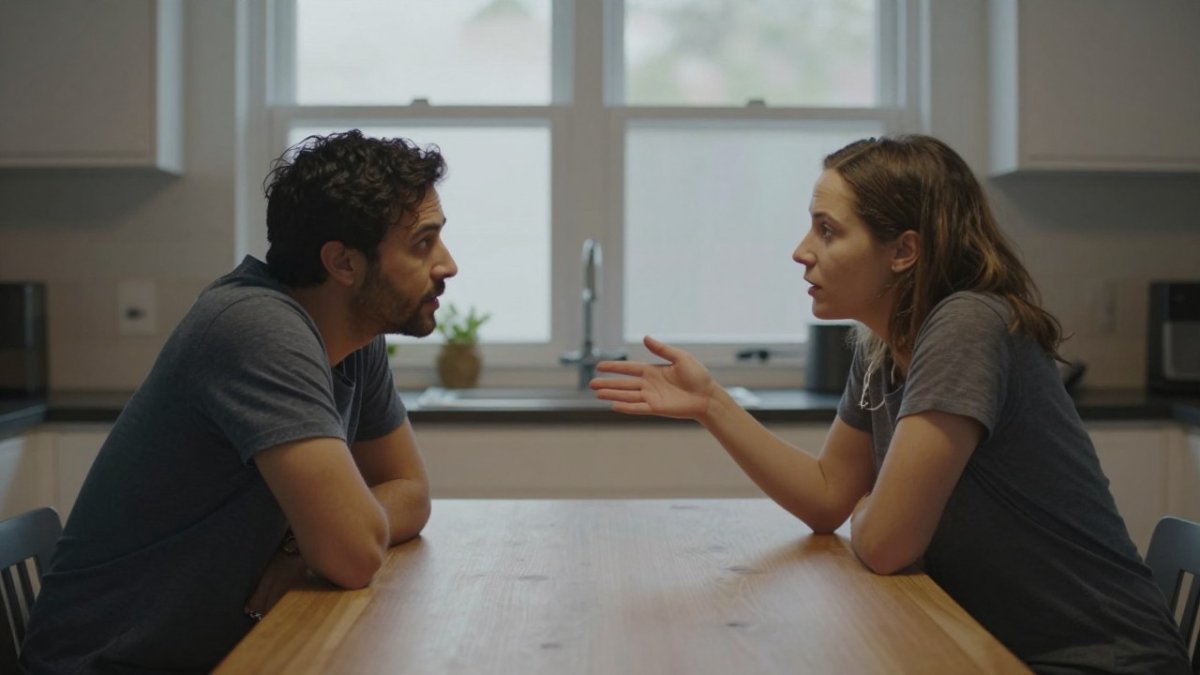
Common patterns include:
- Interrupting or finishing sentences before the other person is done
- Forgetting details of a discussion within hours
- Changing topics quickly during tense conversations
- Reacting to the first half of a message and missing the rest
- Going quiet or withdrawing when overwhelmed
Misunderstandings often follow. Partners may assume the other does not care, when the real issue is working memory, focus, or emotional regulation. Naming this pattern together, rather than blaming each other, is a useful first step.
A repeatable method for raising a concern, listening without defensiveness, and agreeing on one next step can help. The structure below is one way to approach that.
Step 1: Name the moment, not the person. Start with a specific observation rather than a character judgment. "I noticed the bills were late this month" lands differently than "you're so irresponsible." Keep it to one issue at a time.
Step 2: Share your feeling in one sentence. "I felt stressed when I had to remind you" is clear and hard to argue with. Avoid stacking multiple grievances into one opening statement.
Step 3: Ask for their view before offering solutions. "What do you think got in the way?" gives the partner with ADHD room to explain without feeling interrogated.
Step 4: Agree on one change, not five. "Could we use a shared reminder for bills?" is specific and testable. Couples who try to fix everything at once usually fix nothing.
Step 5: Set a time to check in. "Let's review this on Sunday" turns a one-off conversation into a feedback loop. It also gives both partners a reason to notice what is working.
Step 6: Agree on a pause signal for heated moments. Some couples use a phrase like "let's take ten minutes" and return to the topic once both people feel calmer. This is not avoidance; it gives both partners room to think clearly.
Watch out: if a conversation keeps ending in the same fight, the issue may be the format, not the topic.
It is also worth distinguishing ADHD-related communication patterns from incompatibility, contempt, or abuse. Forgetfulness and interruption are common with ADHD.
Finally, communication improves fastest when both partners share responsibility for the fix. The partner with ADHD can practice pausing before responding and asking for clarification.
Forgetfulness, Follow-Through and Shared Household Responsibilities
Forgetfulness and difficulty following through are among the most common sources of friction in adult ADHD relationships. Bills get paid late, appointments slip, and chores start but do not finish. Over time, one partner often becomes the default planner, reminder, and finisher, a role that breeds resentment even when both people care deeply about each other.
The problem is rarely laziness. Working memory, time perception, and task initiation are executive functions that ADHD affects directly. A partner without ADHD may see a simple request, "take out the recycling", while the partner with ADHD experiences a competing demand on an already overloaded mental stack. Without a shared system, the non-ADHD partner absorbs the planning load, and the ADHD partner absorbs a steady stream of criticism. Both end up exhausted.
A practical approach is to agree on shared systems that reduce reliance on memory and distribute ownership fairly:
- Use one shared calendar that both partners check daily, with reminders set for recurring tasks. Put it somewhere visible, not buried in an app only one person opens.
- Assign clear task ownership, not vague agreements. "You handle bills, I handle appointments" works better than "we'll both try to remember." Ownership includes the planning, not just the doing.
- Set phone reminders for recurring tasks and link them to a specific time and place, for example, a reminder to pay bills that fires when the partner is at their desk, not in the car.
- Review the system once a week for ten minutes. Ask three questions: What slipped? What worked? What needs to change? Keep it short and blame-free.
- Build in a buffer for the non-ADHD partner. If one partner needs extra reminders, agree on how many and when, so the other is not endlessly repeating themselves.
These steps do not fix ADHD, but they reduce the number of things that depend on memory alone. They also shift the conversation from "you forgot again" to "how do we make this easier to remember?"
Watch out: systems that only the non-ADHD partner maintains quickly become another form of unequal labor. Both partners need to own their part of the system, including reviewing it and flagging when it stops working.
When the workload still feels unequal, name it directly rather than letting resentment build. A useful script is: "I'm carrying most of the planning right now, and I'm getting tired. Can we look at what each of us owns and rebalance?" This keeps the focus on the system, not on who is at fault.
For couples where forgetfulness is severe or long-standing, a clinical assessment can clarify whether ADHD or another condition is contributing. A free adult ADHD screening is an educational starting point, not a diagnosis, but it can help both partners reflect on patterns before deciding on next steps.
The article describes the forgetfulness and follow-through patterns that most often strain adult ADHD relationships, along with the practical steps it recommends for sharing the load.
Pattern | Cause | Practical fix |
|---|---|---|
Bills paid late | Working memory and time perception | One shared calendar with reminders |
Chores started, not finished | Task initiation difficulty | Clear task ownership, not vague agreements |
One partner plans everything | Unequal planning load | Weekly ten-minute system review |
Repeated reminders | Overloaded mental stack | Agreed reminder count and timing |
Resentment building | Systems only one partner maintains | Both partners own and review the system |
Impulsivity, Emotional Intensity and Conflict in Couples
Impulsivity can lead to quick decisions, spending without planning, or saying something before thinking it through. Emotional intensity can make small disagreements feel larger than they are. Both can strain a relationship when the other partner is unprepared.
A helpful habit is a short pause before responding in a heated moment. Some couples agree on a signal, such as "let's take ten minutes," and return to the topic once both people feel calmer. This is not avoidance. It gives both partners room to think clearly.
Recognising Undiagnosed ADHD and Relationships Without Blame
Many adults never receive an ADHD diagnosis as children. They may have been called lazy, forgetful or disorganised for years. When the symptoms are not recognised, both partners can feel stuck in the same arguments.
Signs to consider include a long history of missed deadlines, difficulty with focus at work or home, and frustration that seems out of proportion. Reflecting on these patterns together, without assigning blame, can open the door to a conversation about getting professional help.
A free screening tool is available for adults who want to reflect on these concerns. It is a starting point, and a qualified clinician is needed for any diagnosis.
ADHD Relationship Withdrawal and How Partners Can Respond
Some adults with ADHD pull back from a relationship when they feel overwhelmed or ashamed of falling short. This withdrawal can look like avoiding conversations, spending more time alone, or going quiet during stressful periods.
Partners can respond by:
- Asking open, calm questions rather than demanding answers
- Acknowledging effort, even when results are inconsistent
- Setting small, achievable shared goals
- Noticing when withdrawal is a sign of stress that needs support
If withdrawal lasts for weeks or affects mood, a professional assessment is worth considering.
Step-by-Step ADHD Relationship Scripts for Couples
Scripts can make hard conversations easier to start. Try this structure:
- Name the moment. "I noticed the bills were late this month."
- Share your feeling. "I felt stressed when I had to remind you."
- Ask for their view. "What do you think got in the way?"
- Agree on one change. "Could we use a shared reminder for bills?"
- Set a time to check in. "Let's review this on Sunday."
Keep the conversation focused on one issue at a time. Avoid words like "always" and "never," which tend to shut down discussion.
Booking Your First Step Toward a Clinical ADHD Assessment
If the patterns in this guide feel familiar, a clinical assessment can clarify what is going on. Online adult psychiatry consultations are one option for adults concerned about ADHD. Keycom Online offers these consultations, where you can check where you will physically be during the appointment and request a one-to-one consultation.
Adults over 30 often wonder what an assessment involves. Adult ADHD Diagnosis After 30: What to Expect explains the general process. You can also check adult ADHD resources and free screening before deciding on next steps.
A clinician can review your history, discuss symptoms and talk through treatment options. Bring notes about examples from work and home, and ask questions about anything unclear.
Frequently Asked Questions
How do you survive a relationship with someone who has ADHD?
Start by treating ADHD as a shared logistics problem rather than a character flaw. Agree on a small number of written systems for bills, appointments and chores, such as a shared calendar and reminder app, and review them together every few weeks. Name the specific behaviour that bothers you instead of making broad statements about the person, and ask what would make follow-through easier for them. Couples often find that consistent routines reduce friction more than any single conversation does. If conflict repeats despite these steps, a couples counsellor or a clinical assessment can help both partners understand what is driving it.
Can adults with ADHD have long-term relationships or marriages?
Yes. Many adults with ADHD maintain long-term partnerships, and outcomes depend heavily on whether both partners understand the condition and share responsibility for managing its effects. Relationship difficulties are common, particularly around communication, forgetfulness and emotional intensity, but they are not inevitable. Couples who identify patterns early, use external supports and agree on how to handle conflict tend to fare better. Treatment for ADHD, where appropriate, can also reduce some of the symptoms that strain relationships. A clinical consultation is the right place to discuss what treatment options may suit an individual.
How can undiagnosed ADHD affect an adult relationship?
When ADHD is undiagnosed, a partner may interpret forgetfulness, missed plans, interrupting or emotional outbursts as lack of care or effort. The person with ADHD may also feel criticised for traits they cannot easily control and may not understand why they keep struggling. This can build resentment on both sides over time. Recognising that these patterns may have a neurological basis can shift the conversation from blame to problem-solving. An accessible way to explore this is a free adult ADHD screening, followed by a consultation with a qualified professional if the results suggest it is worth investigating.
What can couples do when an ADHD partner withdraws or seems distracted?
Withdrawal can come from overwhelm, shame about missed responsibilities, or difficulty sustaining attention during long conversations. Rather than pressing for an immediate response, agree on a signal that means I need a break and a time to return to the topic. The partner who feels ignored can say what they noticed and what they need, using specific examples rather than general accusations. Short, regular check-ins often work better than long discussions after a problem has built up. If withdrawal is frequent or accompanied by low mood, speaking with a clinician about anxiety, depression or ADHD is a reasonable next step.
Dr Emmanuel Oyebanre is a consultant psychiatrist with clinical experience across Austria, Ireland, Aruba, Ukraine and Nigeria. His work spans general adult and addiction psychiatry, including the assessment of adult ADHD, mood and anxiety disorders, and substance use concerns. Through Keycom Online, he helps adults understand their mental health and make informed decisions about seeking support. He is also the author of Finding Purpose in the Middle of Addiction.